
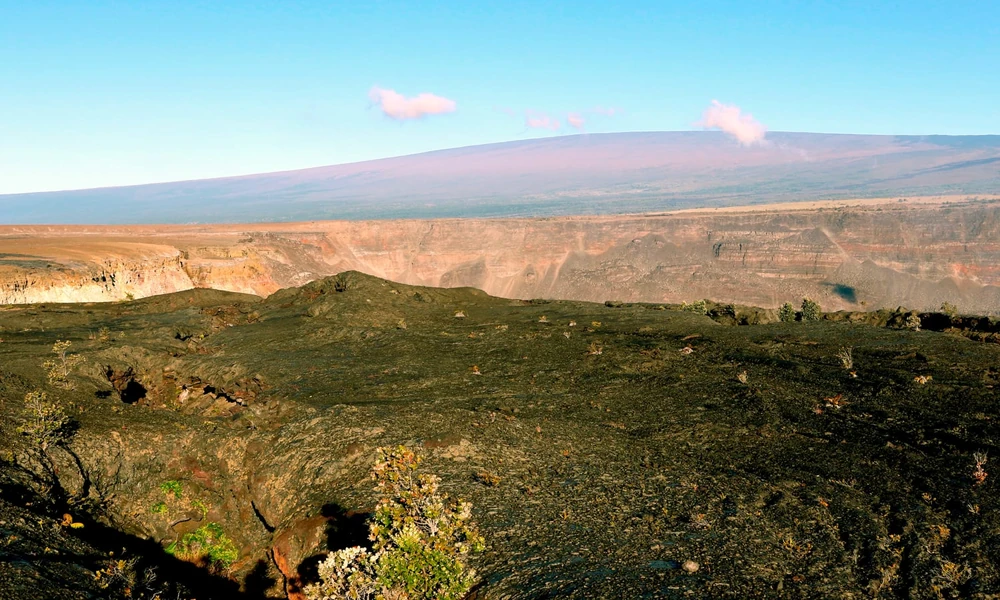
Most homeowners think about earthquakes in terms of the big one. The dramatic shake, the cracked wall, the news footage. But Hawaii’s seismic reality is quieter and, in some ways, more damaging than that. The islands sit on one of the most geologically active spots on the planet, and the cumulative effect of dozens of minor tremors, micro-settlements, and volcanic soil movement wears down a residential foundation over decades in ways that no single dramatic event would.
If your home is more than 15 years old, there’s a real chance it has absorbed ground stress you’ve never felt but your foundation absolutely has.
Why Hawaii Is a Uniquely Demanding Place to Build a Foundation
The Hawaiian Islands didn’t form the way most land does. They pushed up through the Pacific Plate from volcanic hotspots, and that origin story shapes everything underneath your home right now. The soil profile across Oahu and the other islands is wildly inconsistent. You might have dense basalt bedrock 10 feet down in one yard and saturated alluvial fill in the next. That inconsistency is the root cause of most foundation trouble here, because a foundation built without accounting for what’s directly beneath it will eventually move toward the path of least resistance.
The Hawaii State Hazard Mitigation Plan identifies areas underlain by NEHRP Class D and E soils as particularly susceptible to liquefaction, a process where loosely packed, saturated sediment temporarily loses structural strength during seismic shaking. According to the 2018 State of Hawaii Hazard Mitigation Plan, liquefaction risk concentrates in coastal and low-lying areas, which covers a substantial portion of where Honolulu’s residential neighborhoods actually sit. That’s not a theoretical risk. It’s a documented condition under many existing homes.
And the earthquakes themselves are constant. Hawaii averages hundreds of recordable seismic events per year. Most are too small to feel, but the cumulative micro-strain on a concrete footing or a shallow slab adds up over 30 years in ways that periodic inspections routinely miss.
The Three-Layer Foundation Stress Model
Here’s a framework I find useful for thinking about how Hawaiian seismic conditions actually degrade a foundation. Think of foundation stress as operating on three distinct layers simultaneously:
- Acute stress: Visible damage from a significant seismic event. Cracked slabs, shifted footings, jammed doors. This is what most homeowners watch for.
- Chronic stress: Repeated micro-movement from minor tremors and soil expansion cycles that causes hairline fractures and gradual differential settlement. This is what most homeowners miss.
- Latent stress: Pre-existing soil conditions, fill soil that was never properly compacted, or a foundation originally designed without adequate depth. These vulnerabilities sit dormant until seismic activity or soil moisture changes activate them.
Most foundation failures in Hawaii happen when chronic and latent stresses meet. The house has been slowly moving for years, the soil beneath was never ideal, and then a moderate earthquake or a wet season tips the whole system into visible damage. By that point, you’re dealing with a problem that started long before the symptom appeared.
This is exactly why surface-level repairs, patching cracks or releveling slabs without addressing what’s below, rarely hold for more than a few years in this environment.
What Differential Settlement Actually Looks Like in a Honolulu Home
Take a post-World War II concrete block home in Kalihi. The footings were built to the standards of the 1950s, which didn’t account for deep soil variability the way modern geotechnical surveys do. The lot was graded with fill material. Over 70 years, the fill has compressed unevenly. One corner of the home has dropped roughly half an inch more than the opposite corner.
You’d notice it as a door that no longer latches, a crack running diagonally from the upper corner of a window frame, or a floor that feels subtly off when you walk across it. None of these things look like earthquake damage. All of them are the result of cumulative seismic and soil stress working together over decades.
The fix for that scenario isn’t a patch. It’s a structural solution that reaches past the compromised fill to competent soil or rock beneath it. That’s why homeowners in situations like this typically turn to deep foundation installation experts in Hawaii who can assess what’s actually happening below the surface and anchor a structure to something stable, rather than just addressing what’s visible from the top.
How a Growing Construction Market Shapes the Risk Landscape
Hawaii’s construction industry has expanded significantly in the past decade. According to Hawaii’s Department of Business, Economic Development and Tourism, the total value of construction as measured by the contracting tax base reached $11.8 billion in 2023, with construction payroll jobs hitting a historic high in late 2024. That volume of new residential and commercial construction means more structures going up across varied soil conditions, often at speed.
Speed and soil variability are a poor combination. When site preparation doesn’t include deep geotechnical assessment, homes get built on soil profiles that look fine at the surface but hide the NEHRP Class D and E conditions that make seismic stress so damaging over time. The boom in construction is great for the local economy, but it also means a wave of newer homes that could start showing foundation stress within 10 to 20 years if the ground conditions beneath them weren’t properly characterized at build time.
A Practical Checklist for Hawaii Homeowners
You don’t need to be a structural engineer to stay ahead of seismic foundation stress. Work through this checklist once a year, ideally after Hawaii’s wet season ends:
- Walk the perimeter of your home and look for new diagonal cracks in exterior walls or the foundation itself. Hairline horizontal cracks are less urgent. Diagonal and stair-step cracks in block walls are a signal to act.
- Open and close every exterior door. A door that binds or no longer sits flush in its frame is one of the earliest signs of differential settlement.
- Check interior floors with a 4-foot level in multiple rooms. A slope you can feel but haven’t addressed is worth measuring.
- Look at your driveway or any concrete flatwork adjacent to the house. Separation between the slab and the foundation or visible sinking near one edge suggests the soil underneath is moving.
- If your home was built before 1975, commission a geotechnical assessment that includes soil boring data. The original construction likely predates modern seismic codes and certainly predates awareness of liquefaction risk zones.
“Low-rise buildings might sink, but high-rise buildings which are anchored in the underlying rock should be able to survive without collapsing.” The Hawaii State Hazard Mitigation Plan drew that contrast to highlight a basic engineering truth: depth of anchor determines resilience. For residential structures that can’t reach bedrock through traditional shallow footings, modern remedial systems exist specifically to replicate that deeper connection.
Acting Before the Symptoms Get Loud
The homeowners who spend the least on foundation repair are not the ones who react fastest after a visible problem appears. They’re the ones who understood their soil conditions early, scheduled periodic assessments, and caught differential settlement while it was still measured in fractions of an inch rather than structural misalignment.
Hawaii’s seismic environment won’t slow down. The ground here moves, and it has been moving under your home since the day it was built. The question isn’t whether cumulative stress is affecting your foundation. For most homes on this island older than 20 years, it almost certainly is. The only real question is how far along the damage curve you’re sitting right now, and whether you address it while options are still straightforward.

Comments are closed.