
Your kid will be gone for nine hours, and you’ll get about four words back. “It was good.” That’s the deal. But the not knowing is the part that keeps parents up in May. You’ve already pictured a dozen worst cases by the time the bus pulls out. Here’s some relief: the camp day is one of the most tightly choreographed routines your child will ever move through, and once you see the shape of it, the worries shrink fast.
I’ve spent enough drop off mornings standing in the parking lot to know the rhythm matters more to parents than to kids. Kids care about the pool. Parents care about where the pool sits in the schedule, who supervises the transition, and whether anyone remembers the sunscreen. So let’s walk the whole day, hour by hour, and talk about what you actually need to do. If you want the official picture of the experience, start with the page on inside a day at Camps ‘R’ Us and then come back here for the parenting side of it.
Camp runs on predictability. Arrival, assembly, activity block, water, lunch, rest, activity block, swim, pickup. Same order, same staff, every day. That repetition is the product, even though nobody advertises it. A child who can predict what happens next acts calmer, complains less, and tries more. So the first move is to learn the schedule with your kid before opening day, not after.
Morning Arrival and the Drop Off Line
Drop off happens in a narrow window, usually somewhere between roughly 8:40 and 9:10 in the morning. Vehicular drop off moves fast by design. You pull up, a staffer opens the door, your kid hops out, and you’re already being waved forward. Do not get out to help with the backpack. Practice the door exit at home so your kid can grab the bag and shut the door without you leaving the driver’s seat.
The first morning is slower. Buses unload, kids find their group by age, and counselors mark attendance. Ask your child to learn their group leader’s name on day one, not their friend’s name. Knowing one adult who will be there all week is the single fastest way to settle a nervous kid. And if your child is a first timer, expect a little cling on Monday and a sprint on Wednesday. That transition is normal.
Keep goodbyes short. A long goodbye tells your child you are worried. A quick one tells them this place is fine. I’d argue the fastest way to make the first week rocky is a five minute parking lot pep talk every morning.
Activity Blocks: Sports, Crafts, and the Quiet Hour
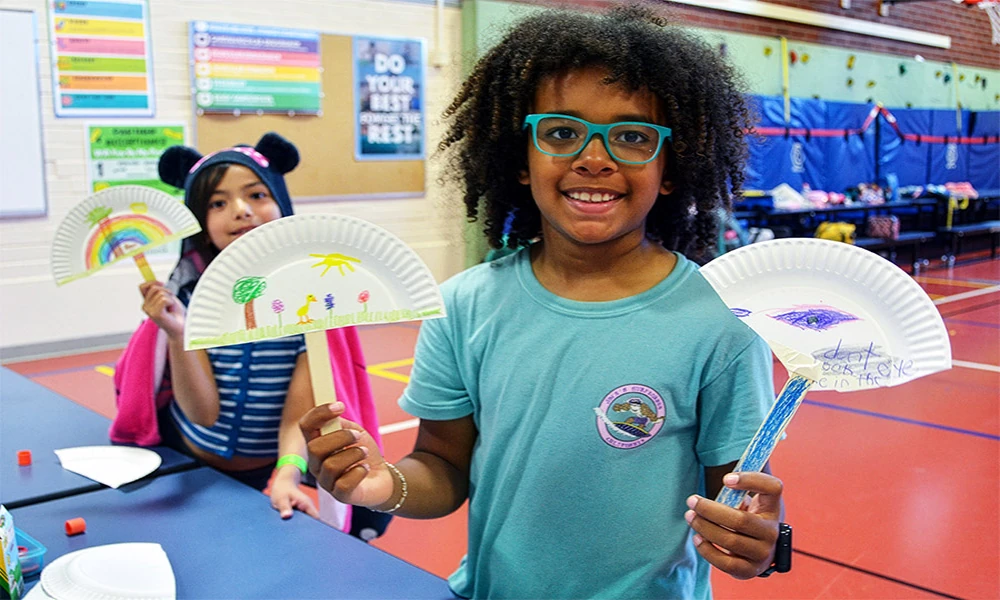
Most of the day sits in blocks of roughly forty five to sixty minutes. Field sports, court sports, arts and crafts, and a games rotation. Kids rotate through stations instead of picking one specialty. This surprises parents who expect camp to be a single focus, like soccer only. That variety is a good thing. A child who gets tired of basketball has a craft block ahead of them. And a child who dislikes glue and glitter has a splash zone in the afternoon. Watch which block your kid talks about at dinner. That tells you what to sign them up for next summer.
Rest hour sits somewhere in the middle of the day, and it earns its slot. Even older campers benefit from a slower half hour after lunch. Pack according to that. A paperback beats a battery powered gadget, since most camps ask you to leave electronics at home anyway.
The Splash Zone and Swim Safety
Swimming is the part of the day parents ask about most. Here’s the honest answer: camp swim blocks are run by staff with lifeguard training and a head count system that repeats at every entry and exit. That structure exists because water safety is a documented, well studied area, and you can read the practical baseline from the Centers for Disease Control and Prevention if you want the full rationale behind supervision ratios and swim skill rules.
What you should actually do is simple. Label the swimsuit and the towel with your kid’s last name, and pack a second pair of socks and underwear for swim days. Kids forget to fully dry off, then sit through an afternoon block damp. A small tote inside the backpack that holds the wet suit and towel keeps the rest of the bag from becoming a swamp by Wednesday.
Field Trips and Off Site Days
Most camps run at least one off site trip per session, and the routine changes on those days. Buses leave earlier, kids wear a camp shirt so staff can spot them in a crowd, and lunch is usually packed rather than served. That camp shirt is not a fashion accessory. It’s a roll call tool.
Off site days are where I’d really push you to write everything down. Put the trip date on the family calendar, pack the morning before, and send your child in shoes built for walking. Campers cover more ground than parents expect. The broad logic behind field trips holds up: place based learning helps children connect what they study to the real world, a point the U.S. Department of Education anchors in much of its guidance on experiential learning.
Pack the Night Before, Not the Morning Of
Morning of packing is how lunches get left on the counter. Here’s the routine that actually works, and it takes about six minutes if you get your kid to help.
- Lay out the camp shirt, shorts, and sneakers the night before. No decisions at 8:15 in the morning.
- Fill a labeled water bottle and put it in the bottle pocket, not loose in the bag.
- Pack sunscreen with your kid’s name on it and apply a base layer before you leave the house.
- Build lunch from things that survive a warm backpack. Skip anything that needs refrigeration.
- Add the wet tote for swim days and a spare pair of socks.
- Clip a small name tag to the bag strap if the bag rides a bus every morning.
Two of those steps matter more than the rest. The water bottle and the sunscreen. Kids under hydrate in the heat because they’re busy, and the camp day has no quiet moment where a counselor can hand out refills to a whole group. The National Park Service makes the same point in its public guidance on heat and hydration for children outdoors, and it applies to a sunny ball field in July just as much as to a trail.
Afternoon, Pool Time, and Pickup
The afternoon usually holds the swim block and a final activity, then pickup starts. Expect the same fast moving line you saw in the morning, plus a staffer checking names. Your kid will come out tired, hungry, and possibly wearing a shirt they don’t own. That last one is a real thing and it’s why the name tag matters.
Ask two questions on the ride home. What was the best part, and who did you sit with at lunch. The second question gets you more than the first, almost every time.
The Day Your Kid Will Describe at Dinner
The camp day is a repeatable loop, and that loop is exactly why parents can relax. You know drop off. You know the blocks. You know swim comes after lunch and the wet tote goes in the bag the night before. Nothing about the structure is a mystery once you’ve walked it once.
Fill the bottle tonight, label the sunscreen, and set the bag by the door. Then ask your child who they sat with at lunch. If the answer is a name you haven’t heard yet, you’re already doing this right.

Comments are closed.