
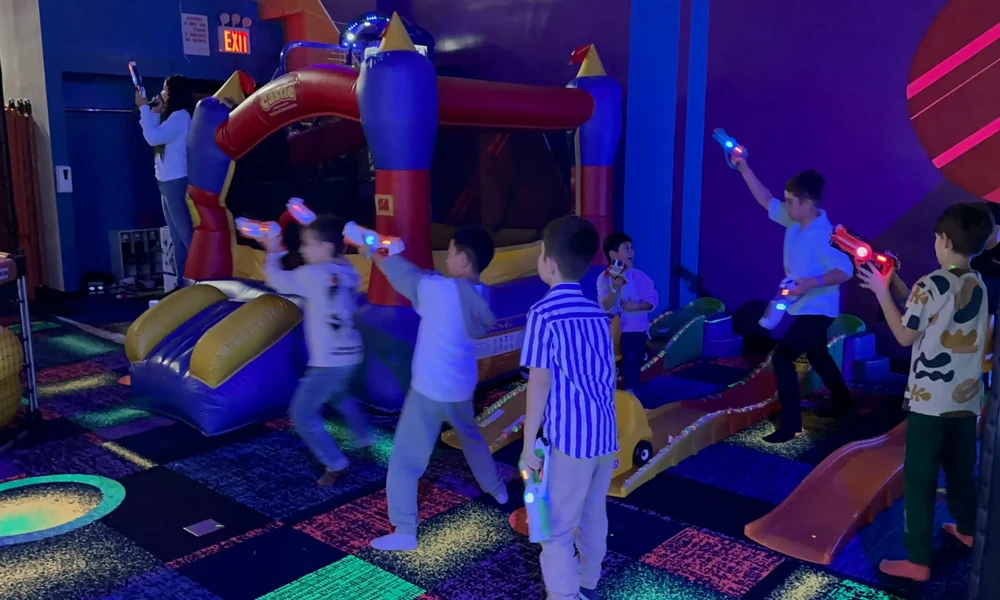
Forty minutes. That is how long a typical laser tag party stays fun before the wheels come off, and it almost never has anything to do with the kids. It has to do with the adults booking a session without knowing the arena layout, the age floor, or how many players fit on a team. Book it right and you get a birthday your kid describes to friends for a month. Book it wrong and you get a parking lot full of sugar-crashed ten-year-olds and a very quiet drive home.
I have watched a lot of party groups walk into an arena with zero plan. The ones that go smoothly share a handful of habits. They pick a venue with an actual scoreboard. They split teams on purpose. They leave buffer time around the session instead of sprinting from a pizza place. And they treat the whole thing like a mission, not an activity. If you are within driving distance of south Georgia, a laser tag arena near Valdosta gives you the fog, the lighting, and the score tracking that make the mission feel real.
Here is the practical part. Below is the framework I use for planning any group session, followed by the checklist, the safety notes you should actually care about, and the mistakes I see parents repeat every single weekend.
Why the venue matters more than the guest list
A great guest list will not save a bad arena. A dark, single-room setup with one team of twelve and no scoring turns into a glorified game of tag in about five minutes. Look for three things before you put down a deposit.
- A layout with cover. Pillars, barriers, or glowing obstacles give kids something to strategize around instead of just running in a circle.
- Live scoring. When players can see their hits and rankings, they stay engaged past the first round.
- A cap on players per session. Twenty is a workable ceiling for a team format. Forty in the same space is a shuffle.
Ask how long each round runs, too. Fifteen minutes is standard and about right for younger kids. Two back-to-back rounds is usually the sweet spot for a party, since the second round gives everyone a chance to adjust their strategy.
The Bass Line Framework for group sessions
I call this the Bass Line because it keeps the party on a rhythm instead of letting one loud song take over. Four beats, in order, and the last two are the ones most planners skip.
Beat one: Brief. Before anyone touches a phaser, two minutes of instructions. Where the walls are, where the spawn point is, and what the objective is. Kids who walk in blind spend the whole first round bumping into each other.
Beat two: Split. Balance teams by age and energy, not by friendship. Put every kid’s best friend on their team and you get one cluster of five that never separates. Even teams produce better games, and better games produce better party stories.
Beat three: Debrief. After round one, thirty seconds to regroup. Ask which team got flanked and why. This is where the learning happens and where the quieter kids get a chance to speak up.
Beat four: Celebrate. Read the scoreboard out loud and hand out a cheap prize for top scorer. It costs almost nothing and it locks in the memory.
The debrief beat is the one I would defend hardest. It turns a chaotic scramble into an activity with a shape, and it gives the group a built-in break without everyone taking off their vests and wandering.
The planning checklist you can run in one sitting
Pull this up on a Tuesday night and you will have the whole party mapped before you close the laptop.
- Confirm the age floor at your venue. Many arenas set it at age six and up, and the reasons usually come down to equipment weight and attention span, not safety.
- Lock the player count at least two weeks out. If you expect twelve, tell the venue fourteen.
- Book the session for a weekday evening or a Sunday morning if you can. Saturdays fill first and leave you no flexibility.
- Build the timeline backwards from the session. Arrive thirty minutes early for waivers, and never book a movie or a meal immediately after.
- Send parents the waiver link with the invitation, not the day before. This single step kills the biggest source of party-day delay.
That fifth item is the one I get the most pushback on, and it is the one that saves the most time. Handing out clipboards at the front counter while kids run around is nobody’s idea of a good start.
What you actually need to know about safety
Laser tag is about as low risk as indoor group activities get, and the CDC’s basic guidance on injury prevention applies exactly as you would expect: limit running on uneven surfaces, keep the play area clear, and watch younger players. Most arenas already handle this with rules posted at the entrance and staff stationed in the room.
Ask about eye protection if your group skews young. Many facilities do not require it for laser tag, but I would still ask. The other thing worth knowing is that the risk of a bump-up is highest in the first minute of a round, when everyone sprints toward the middle of the room. A simple rule like no running through the spawn zone heads off most of it.
If you are hosting a birthday party with young guests, the same logic applies as with any large indoor group activity. Household fire safety organizations like the National Fire Protection Association recommend parents know at least two ways out of any unfamiliar building, and a party venue is no different. Walk the exit route with your group once, on the way in. It takes fifteen seconds.
The three mistakes I see every weekend
Booking a session with no buffer. Parties that run back to back with a dinner reservation always feel rushed. Give yourself an hour of cushion on either end.
Inviting too many kids for one session. Twenty players is a comfortable cap. Twenty five means someone sits out a round, and that someone is always the kid who has been looking forward to this all week.
Treating the party like a spectator sport. Parents standing around the edge of the arena tend to be the ones with kids who get overwhelmed. If you are hosting, play a round yourself. It settles the group and sets the tone. The parenting guidance on group activities points to the same thing: adults modeling participation is what keeps a group cohesive.
A party that ends on purpose
Good parties have an ending that everyone can see coming. Do not let the session just dissolve into a parking lot goodbye. Read the final scores, name a champion team, and hand out the slices. Kids remember the ceremony more than the cake.
Want the easiest version of all this? If you are within reach of south Georgia and want to stop planning around a limited arena, find a launch partner whose venue includes multiple rounds, live scoring, and a space big enough for a full guest list. Book the session, run the Bass Line beats, and let the arena do the work. Your kid will do the bragging for you.

Comments are closed.