
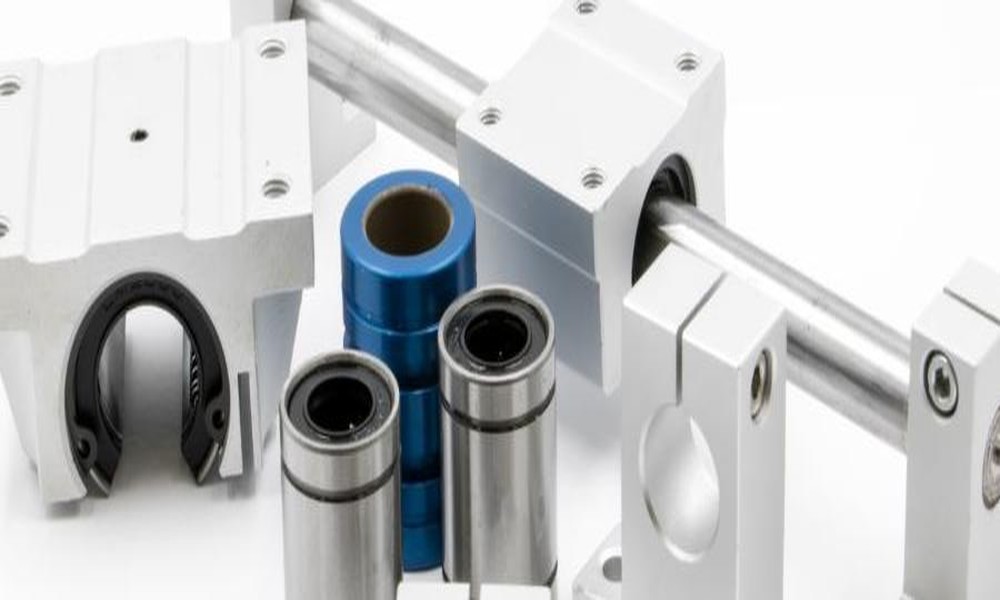
In the industrial spare parts market, price volatility often leaves procurement officers and engineers in a dilemma: Is a premium LME linear bearing (In Thai known as ‘ลูกปืนสไลด์ LME‘) truly worth the extra cost? While budget-friendly options may seem attractive initially, the hidden costs of low-quality components can be staggering. Understanding the technical nuances is essential to ensuring machinery longevity and maintaining operational efficiency in high-precision environments.
Why “Budget” Components Cost You More?
In industrial operations, the initial purchase price is often just the tip of the iceberg. Selecting a sub-standard LME linear bearing creates a domino effect of operational inefficiencies:
– The Cycle of Frequent Replacement: Low-cost bearings often utilize materials with inferior surface hardness, leading to rapid wear even under normal loads. This forces frequent replacements, where the cumulative cost of multiple cheap units eventually exceeds the price of a single premium component.
– Escalating Machine Downtime: Every minute of unscheduled maintenance disrupts production quotas. The financial loss from stalled production cycles often dwarfs the minor savings gained during the initial procurement of the part.
– Irreversible Shaft Damage: This is the most critical risk. Poor internal ball circulation or inferior metallurgy in budget bearings can score and damage the surface of precision-ground linear shafts. Replacing an entire shaft system is a major overhaul that is far more expensive than investing in quality bearings from the start.
7 Key Indicators: High-Quality vs. Budget LME Linear Bearings
1) Material Hardness and Metallurgy: Premium LME bearings are crafted from high-carbon chromium steel (such as SUJ2) with precise heat treatment. This ensures the raceways withstand millions of cycles without surface fatigue, whereas cheaper versions often use softer alloys that fail prematurely.
2) Dimensional Tolerance and Precision: High-end bearings strictly adhere to ISO and JIS tolerances. This guarantees a perfect fit with the linear shaft, eliminating the “play” or wobbling that compromises the accuracy of CNC or automation systems.
3) Smoothness of Ball Circulation: The internal geometry of premium bearings is ground to a mirror finish. This reduces rolling resistance and noise, leading to smoother motion and significantly less strain on the drive motor.
4) Quality of Integrated Seals: A high-quality seal must remain flexible yet robust enough to exclude contaminants while retaining vital lubricants. Budget seals often harden, crack, or tear, allowing dust to enter and destroy the internal rolling elements.
5) Verified Load Sustainability: Premium manufacturers provide load ratings based on rigorous, standardized testing. Budget options often fail to meet their advertised specifications, leading to sudden mechanical failure under actual operational loads.
6) Internal Cage Design and Composition: The cage guiding the balls is a frequent failure point. Premium cages are made from engineered, heat-resistant polymers or high-grade metals designed to resist impact and high-speed friction without breaking.
7) Manufacturing Consistency: Top-tier brands ensure every single unit is identical. In contrast, budget suppliers often exhibit high variance in quality, making it impossible for engineers to standardize maintenance intervals or predict machine lifespan.
Selecting an LME linear bearing based solely on the lowest quote is rarely a sound business strategy. By prioritizing these seven factors-ranging from material science to precision tolerances-manufacturers can significantly lower their Total Cost of Ownership (TCO) and protect their machinery from premature wear.
For those seeking technical expertise and high-standard LME linear bearing solutions that prioritize quality over compromise, I.N.B provides the engineering support and inventory reliability necessary to support industrial operations with confidence.

Comments are closed.