
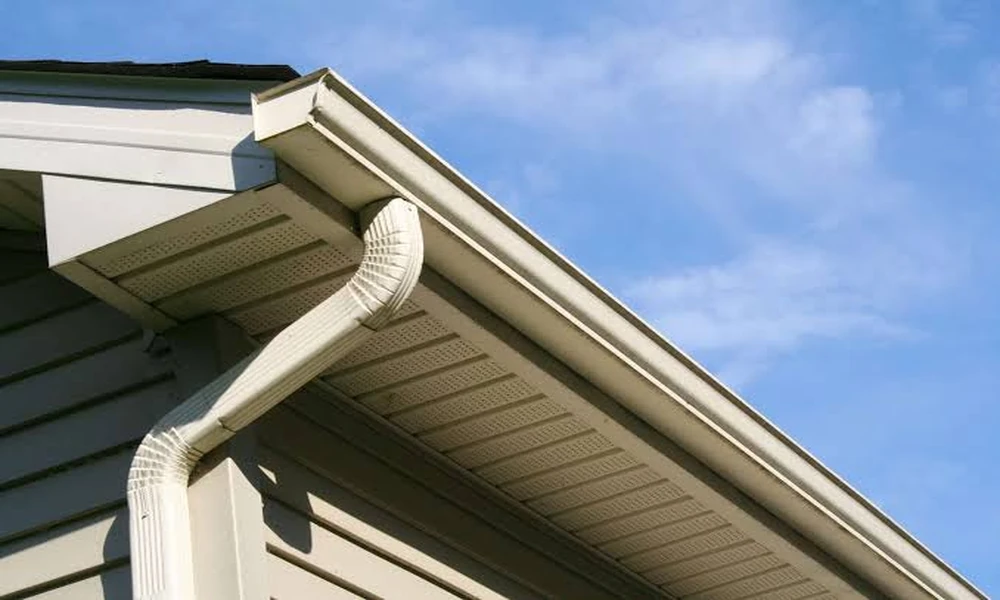
Most homeowners never think about their gutters until water is pouring through the ceiling or the basement smells like a marsh. By that point, a $200 cleaning has turned into a $4,000 foundation repair. The good news: gutters give off real, visible warnings long before the expensive damage starts. Knowing what to look for puts you weeks ahead of the problem and keeps a small fix from becoming a structural nightmare.
Why Michigan Winters Make This Especially Urgent
Michigan is not a forgiving climate for exterior home systems. According to NOAA’s State Climate Summaries (2022), Michigan’s long-term statewide average precipitation is 31.7 inches annually, and the number of extreme precipitation events – days with 2 or more inches – has been increasing since 2000, with record-high multi-year values recorded for the most recent periods in the dataset. That means your gutters are not just channeling springtime drizzle. They’re handling heavier downpours more often, and in winter, they’re carrying the weight of ice dams forming at the roofline.
Washtenaw County, Jackson County, and Lenawee County all sit in a zone where freeze-thaw cycles happen repeatedly from November through March. Each cycle expands and contracts the metal in your gutter system. Over several seasons, that movement works on every joint, hanger, and seam in ways you can’t see from the ground – until a storm hits and the damage becomes obvious.
So watch for these five signs. Any one of them deserves attention. Two or more at once means you’re already behind.
Sign 1: Gutters That Visibly Sag or Pull Away from the Fascia
Run your eye along the roofline from the street. The gutter should form a clean, straight line with a slight pitch toward the downspout. If you see a dip, a bow, or a section pulling away from the board behind it, the hangers have failed. This happens when debris builds up, water pools instead of draining, and the added weight strains the hardware over time.
A sagging gutter doesn’t just look bad. It collects standing water, which breeds mosquitoes in summer and becomes a solid block of ice in winter. That ice adds more weight, pulls the gutter further, and can pry the fascia board right off the house. Fix the hanger spacing first; if the fascia itself has rotted, that board needs to go before any new hardware is attached.
Sign 2: Paint Peeling or Rust Streaks Below the Gutter Line
Orange-brown streaks running down your siding, or paint that’s bubbling and peeling in a strip directly beneath the gutter, tells you water has been escaping somewhere it shouldn’t. The gutter is overflowing, leaking at a seam, or simply pitched the wrong direction.
Rust streaks on aluminum gutters specifically come from screws or hangers that have corroded. They won’t clean off; the hardware needs to be replaced. Paint damage on the siding is a secondary problem – you’ll deal with it after the root cause is fixed, not before.
“Foundation damage from water intrusion is one of the most expensive and entirely preventable home repair categories. The overwhelming majority of cases trace back to improper drainage at the roof and grade level.” – A frequently cited principle in the residential building inspection community, consistent with findings from the National Association of Certified Home Inspectors training materials.
Sign 3: Water Pooling Near the Foundation or Eroded Mulch Beds
Stand outside during a heavy rain. If water is sheeting off the roofline and hitting the ground in a concentrated stream rather than being directed away from the house through a downspout, your gutters are either clogged or your downspouts are discharging too close to the foundation.
The soil around your foundation acts as a slow sponge. Chronic oversaturation weakens it, and over enough seasons, the pressure from waterlogged soil causes cracks in poured concrete walls and block foundations. The U.S. Census Bureau and HUD’s 2023 American Housing Survey found that 11.8 million occupied homes reported water leakage from outside, a figure that underscores just how widespread exterior drainage failure is across American housing stock. The fix here is often as straightforward as adding a downspout extension or regrading the soil, but only after you’ve confirmed the gutter itself is clear and flowing correctly.
Eroded mulch beds directly below a gutter section are a quieter signal of the same problem. If you’re refilling the same two-foot section of your garden every spring, the gutter above it is doing the excavating.
Sign 4: Mold or Mildew on the Interior Wall Nearest an Exterior Gutter Run
Interior mold near an outside wall is easy to blame on humidity or a roof leak, but gutters are a common culprit that homeowners miss. When a gutter overflows consistently along a specific run, water penetrates the soffit or fascia and wicks into the wall cavity. By the time mold appears on the drywall, moisture has been sitting in the framing for a while.
Check this from the outside too. Look up at the soffit boards directly below the gutter. Staining, soft spots, or visible rot on the soffit are hard confirmation that water is getting behind the system. This is also the point at which a professional eye matters – a technician can probe the wood to determine whether the framing behind the soffit has been compromised before you close anything up.
Sign 5: Gutters That Are Over 20 Years Old with No Record of Repair
A well-installed aluminum gutter system has a long service life, but age plus Michigan winters plus any deferred maintenance shortens that window considerably. If you bought your home and have no record of when the gutters were last serviced, assume they need inspection immediately. Joints that look fine from the ground may be sealed with a layer of caulk that’s cracked and no longer waterproof. Hangers that look stable may have pulled the fastener out of the fascia by a quarter inch – enough to fail under load.
Sectional gutters with joints are especially vulnerable because each seam is a potential leak point. Seamless systems fabricated on-site eliminate most of those failure points, which is why most replacement work today moves away from the old sectional approach.
A Decision Framework: Repair or Replace?
Not every gutter problem requires a full replacement. Here’s a quick way to think about it:
| What You’re Seeing | Likely Action |
|---|---|
| Single sag, intact fascia | Repair (rehang with new hardware) |
| One leaking seam or joint | Repair (reseal or splice) |
| Multiple sags across several runs | Replace |
| Rotted fascia behind the gutter | Replace fascia first, then gutter |
| System over 20 years, no service history | Professional inspection, likely replace |
| Sectional gutters with multiple leaking joints | Replace with seamless system |
This is what I’d call the Gutter Failure Cascade: each sign on its own is manageable, but once two or more show up together, the system is no longer protecting your home and you’re past the repair-only threshold. The cost of one well-timed replacement is almost always less than the cost of the structural repairs that follow if you wait.
If you’re in southeastern Michigan and any of these warning signs look familiar, reaching out to a local contractor who specializes in Residential Gutter Repair Services in Michigan is the fastest way to get an honest assessment of where you actually stand before the next storm season arrives.
One Last Thing: Gutter Guards Are Not a Substitute for Inspection
A lot of homeowners install leaf guards and then mentally check gutters off their maintenance list. Guards do reduce debris accumulation, and they’re worth adding after a clean, well-functioning system is confirmed. But they don’t prevent ice damming. They don’t stop shingle grit from collecting at the bottom of the channel. And they don’t fix a hanger that’s already pulling loose.
Think of guards as a maintenance reducer, not a maintenance eliminator. A yearly visual inspection – from the ground with binoculars if you’re not comfortable on a ladder – takes ten minutes and catches most of these problems while they’re still cheap to fix. Build it into your fall checklist alongside cleaning the dryer vent and checking the smoke detectors. Your foundation will thank you.

Comments are closed.